
What allergy treatment actually involves
Effective allergy treatment is built on three layers, applied in order: reduce your exposure to the trigger, control the inflammation it causes, and where appropriate, retrain the immune system so it stops overreacting in the first place.
All three depend on knowing what the trigger is. If you have not been tested yet, start with allergy testing — treating an unidentified allergy is largely trial and error.
Why allergy treatment so often fails
Patients arrive at the clinic after years of partial relief. The reasons repeat themselves:
- The trigger was never identified. Treatment was aimed at "dust allergy" as a general idea rather than a confirmed, graded result.
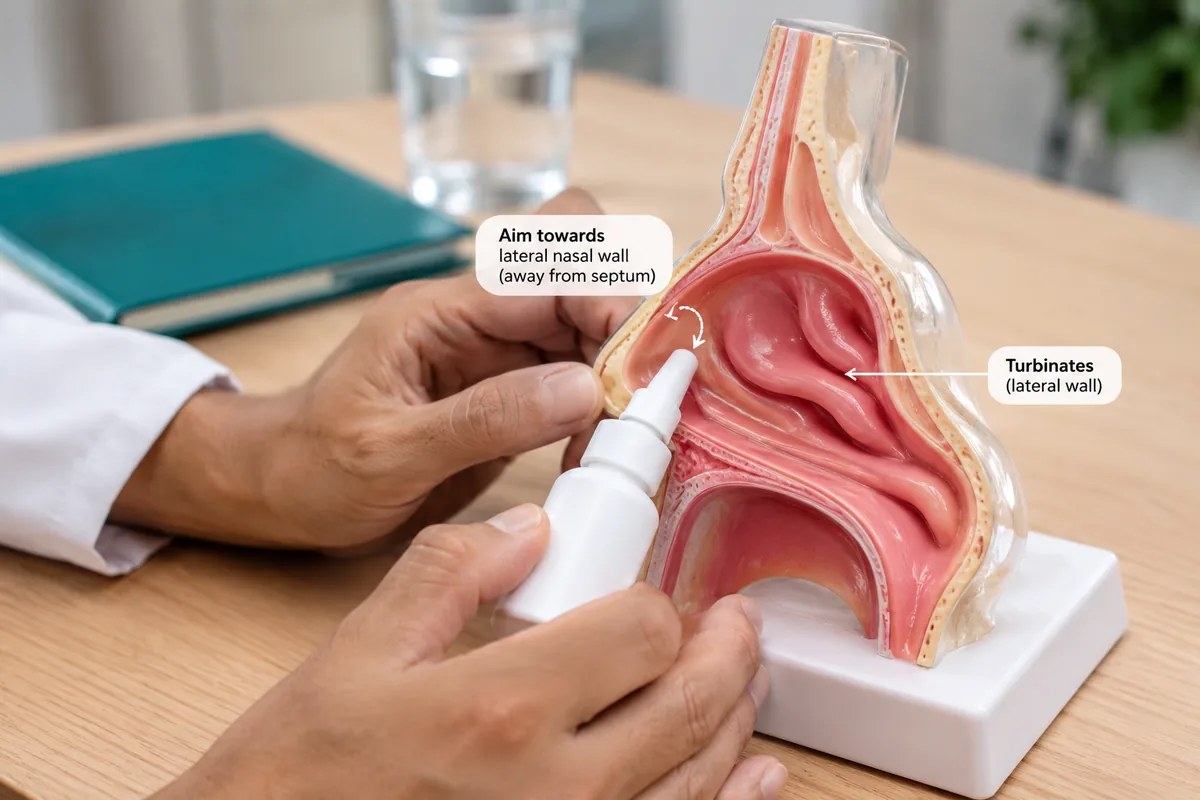
- The nasal spray was used incorrectly. This is the single most common reason a genuinely effective medicine appears useless. Aimed at the septum instead of outwards, it stings, does not reach the inflamed tissue, and gets abandoned within a fortnight.
- It was stopped too early. Intranasal steroids need consistent daily use for two to four weeks before their full effect appears. Most people stop at day four.
- A structural problem was sitting underneath. No amount of allergy medication opens a nose blocked by a badly deviated septum or established polyps.
- Nobody discussed immunotherapy. The one treatment that modifies the disease is frequently never mentioned.
Step 1: targeted avoidance that is actually practical
Generic advice to "keep the house dust-free" is useless. Advice tied to your specific result is not.
For house dust mite — by far the most common positive result in Gurugram homes — the measures that carry real evidence are mattress and pillow encasings, washing bedding weekly at high temperature, removing heavy carpeting and soft toys from the bedroom, and keeping indoor humidity down. Mite allergen concentrates where you spend eight hours breathing against it, so the bedroom is where effort pays.
For pollen, timing matters more than cleaning: keeping windows shut during peak season and in the early morning, showering and changing clothes after being outdoors, and using recirculated air in the car.
For construction and traffic dust — a genuine and under-acknowledged issue across the newer Gurugram sectors — a well-fitted mask on the commute and an air purifier in the bedroom make a measurable difference.
Step 2: medication, used properly
The mainstay for allergic rhinitis is an intranasal corticosteroid spray. Used correctly and consistently, it is more effective than any oral antihistamine for a blocked nose. The dose delivered to the nasal lining is small and it is considered safe for long-term use in appropriate patients.
Tilt your head slightly forward, not back. Use your right hand for the left nostril and vice versa, so the nozzle points outwards towards the outer wall of the nose — away from the septum. Spray gently and do not sniff hard. Sniffing pulls the medicine straight down the throat, which is exactly where it does nothing. If your spray stings or tastes bitter, the angle is wrong.
Antihistamines help sneezing, itching and a runny nose but do relatively little for blockage. Newer non-sedating agents are preferred. Short courses of other medications — leukotriene antagonists, saline irrigation, occasionally a brief oral steroid for a severe flare — are added where the picture calls for it.
Step 3: immunotherapy — treating the allergy, not the symptom
Allergen immunotherapy works on a simple principle. Your immune system is exposed to the confirmed allergen in gradually increasing, carefully controlled doses over an extended period, until it stops treating that substance as a threat.
It is delivered either as subcutaneous immunotherapy (regular injections given under supervision at the clinic) or sublingual immunotherapy (drops or tablets taken under the tongue, largely at home after the first supervised dose). Which suits you depends on your allergen profile, your age and how realistically you can attend regular appointments.
Two things need saying honestly. First, it is a long commitment — typically three to five years for durable benefit, and stopping early tends to waste the effort already invested. Second, it does not suit everyone: it works best for confirmed, strongly positive inhalant allergy in patients whose symptoms genuinely disrupt daily life.
For those patients, it is the only option on the list that can still be working years after the last dose.
Are you a candidate for immunotherapy?
Immunotherapy is generally avoided in uncontrolled asthma, during pregnancy for initiation, and alongside certain heart and blood pressure medications. All of this is reviewed before anything begins.
When the answer is surgical, not medical
Allergy and structure frequently coexist, and treating only one leaves the patient half-better. If examination shows a significantly deviated septum, persistently enlarged turbinates or established nasal polyps, medication alone will not fully open the airway.
In those cases the honest plan is to control the allergic inflammation first, then address the structure — through septoplasty or endoscopic sinus surgery. Surgery is recommended when it will genuinely change the outcome, not as a default.
Why have allergy treated at Vista ENT
- Testing and treatment in one place. No referral loop between a laboratory, a physician and a surgeon.
- An ENT surgeon's assessment. The structural causes that keep a nose blocked are examined by endoscopy at the same visit, not assumed away.
- Technique taught, not just prescribed. You will be shown how to use the spray in the room. It is the cheapest intervention available and it changes outcomes.
- The full range available. Avoidance planning, medication, immunotherapy and surgery — so the recommendation is driven by what you need, not by what is on offer.
The clinic is at Vatika Town Square, Sector 82A, convenient for patients across New Gurugram, Kherki Daula, Manesar, Sohna Road and the Dwarka Expressway corridor.