
Nose and sinus conditions treated
Acute versus chronic sinusitis
Acute sinusitis comes on over days, often after a cold, with facial pain, thick discharge, blockage and sometimes fever. Most cases are viral and settle within ten days without antibiotics.
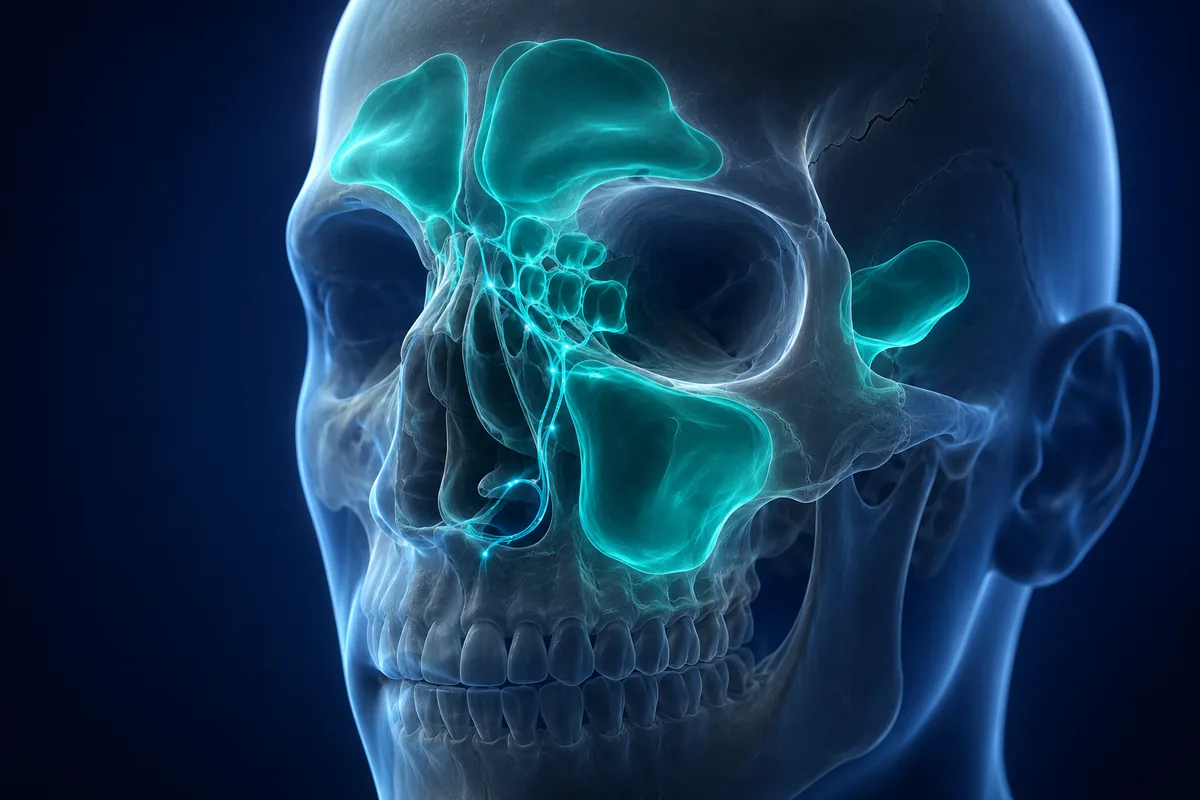
Chronic sinusitis is defined by symptoms lasting more than twelve weeks. It behaves quite differently — less about infection, more about persistent inflammation and blocked sinus drainage pathways. Treating it with repeated antibiotic courses rarely resolves anything, which is why patients cycle through the same prescription for years.
If you have taken three or more antibiotic courses in a year for "sinus infection" and the symptoms keep returning, the problem is probably not the bacteria. It is more likely persistent inflammation, allergy, or an anatomical blockage preventing the sinuses draining. That needs looking at, not another prescription.
Why the nose stays blocked
- Allergic rhinitis — extremely common locally. Confirmed by allergy testing and often the underlying driver of everything else.
- Deviated septum — the partition between the nostrils sits off-centre, narrowing one side.
- Enlarged turbinates — the structures that humidify air swell with chronic allergy and stay swollen.
- Nasal polyps — soft swellings of inflamed lining that physically block the airway.
- Environmental exposure — construction dust and traffic pollution, a genuine factor across the newer Gurugram sectors.
- Overuse of decongestant sprays — more than a few days of over-the-counter decongestant causes rebound congestion, and the spray itself becomes the problem.
Nasal polyps
Polyps are painless, soft grape-like swellings arising from chronically inflamed sinus lining. They cause progressive blockage, reduced or absent sense of smell, and post-nasal drip. They are not cancerous, but they do recur if the underlying inflammation is not controlled.
Loss of smell is often the symptom that finally brings people in. Treatment starts with medical control — intranasal steroids, sometimes a short oral steroid course — and moves to endoscopic surgery when polyps are large or medication fails. Long-term medical control afterwards is what determines whether they come back.
Deviated septum
Most people have some septal deviation and never notice. It matters when it is significant enough to block airflow on one side, contribute to recurrent sinusitis by obstructing drainage, or cause recurrent nosebleeds from a dry spur.
A deviated septum does not respond to medication — no spray straightens cartilage. Where it is genuinely causing symptoms, septoplasty corrects it.
Diagnosis — looking, not guessing
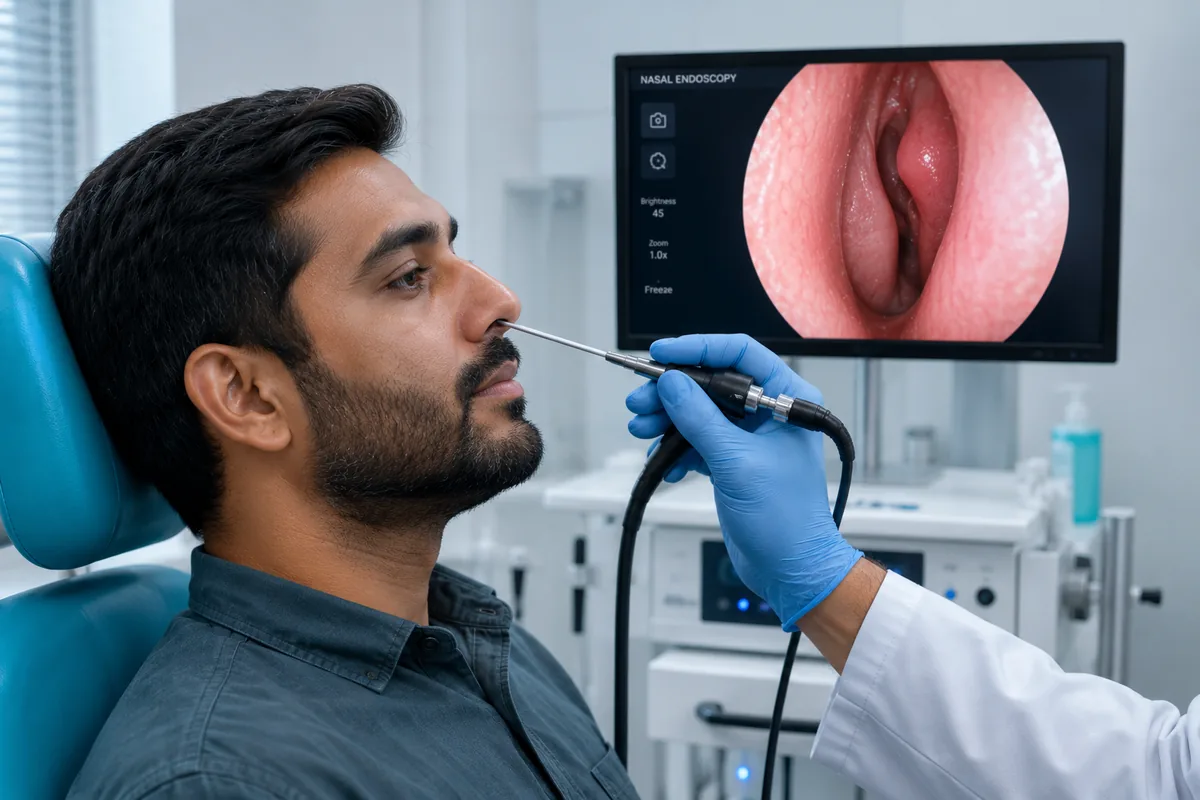
Nasal endoscopy is the key examination. A thin scope passes along the floor of the nose and shows the septum, turbinates, sinus drainage openings and the back of the nose directly. It takes a couple of minutes with local anaesthetic spray, and you watch on the screen.
It answers questions that no history can: whether there are polyps, whether pus is draining from a specific sinus, whether the adenoids are enlarged in a child, and whether the septum is genuinely obstructing. Where surgery is being planned or complications suspected, a CT scan of the sinuses maps the anatomy in detail.
Medical treatment
The mainstays are intranasal corticosteroid sprays used correctly and consistently, saline irrigation to clear mucus and allergen, treatment of the underlying allergy, and antibiotics reserved for genuine bacterial infection rather than used reflexively.
Saline irrigation is underrated. Done properly with a large-volume rinse rather than a token spray, it measurably improves chronic sinusitis symptoms and costs almost nothing.
When surgery is the right answer
Surgery is considered when maximal medical treatment has genuinely been tried and symptoms persist, when polyps are large, when the anatomy blocks drainage, or when complications develop.
Functional endoscopic sinus surgery (FESS) is performed entirely through the nostrils with no external cuts and no facial scars. The aim is not to remove the sinuses but to open their natural drainage pathways so they can ventilate and clear normally — and so that topical medication can finally reach the lining.
Dr. Vardhan's declared areas of interest include endoscopic nasal and anterior skull-base surgery, including endoscopic removal of nasal tumours. Complex cases are performed at Fortis Hospital, Manesar.