Clinic Technology & Diagnostics
A diagnosis you can see is worth more than a diagnosis you are told. Every endoscopic examination at the clinic is displayed on screen while it happens, so you look at your own eardrum, septum or vocal cords rather than taking the finding on trust.
Olympus (Japan) endoscopy equipment
Endoscopy is what separates examination from guesswork. Each of these takes a few minutes in the consultation room.
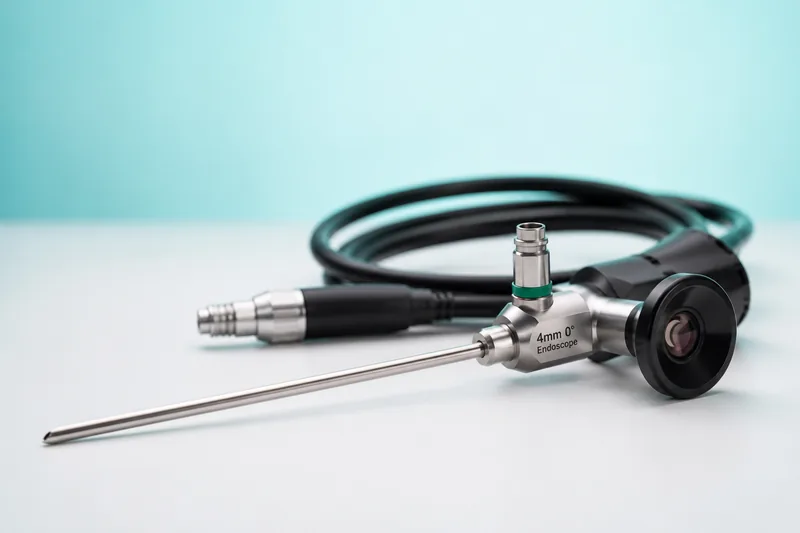
Nasal Endoscopy
A thin scope along the floor of the nose showing the septum, turbinates, sinus drainage openings and adenoids directly. Essential for chronic sinusitis, polyps and blockage.
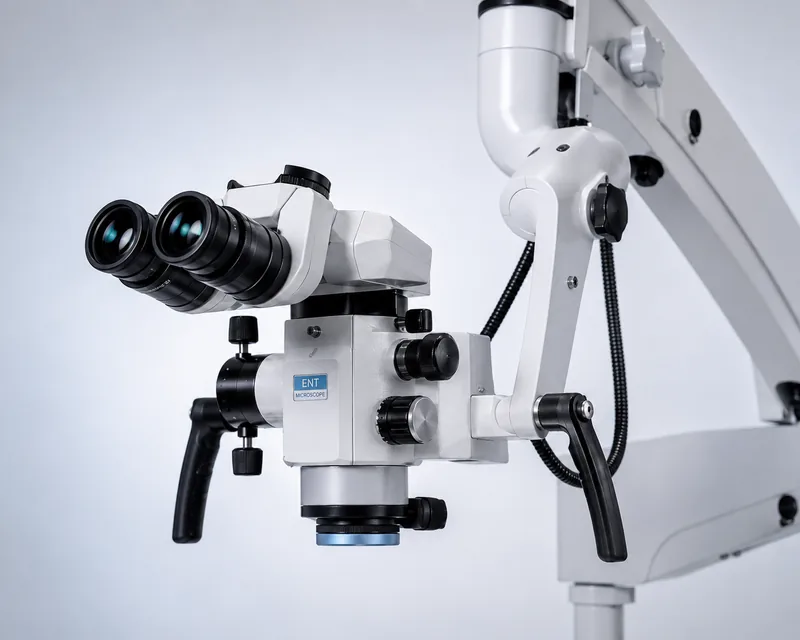
Otoendoscopy
Magnified view of the ear canal and eardrum on screen. Shows perforations, retraction, fluid and wax with far more detail than a handheld otoscope.
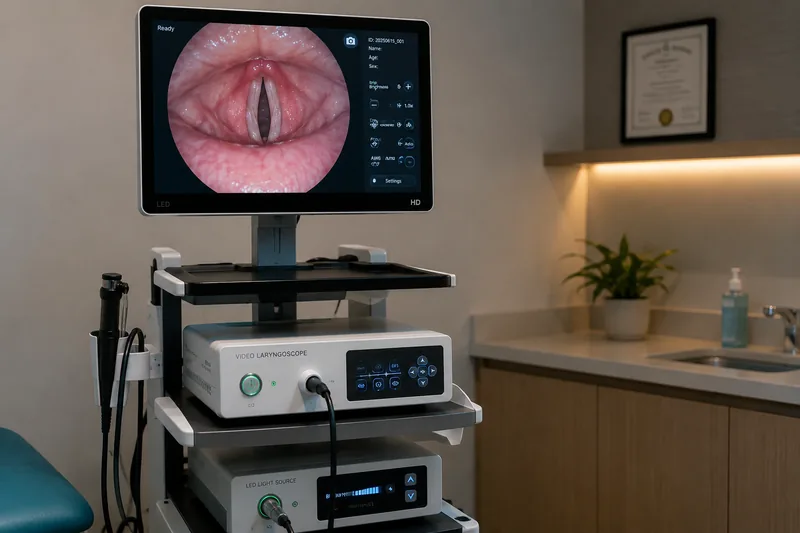
Video Laryngoscopy
Records the vocal cords while you speak. Essential for hoarseness lasting more than three weeks, and for assessing nodules, polyps and cord movement.
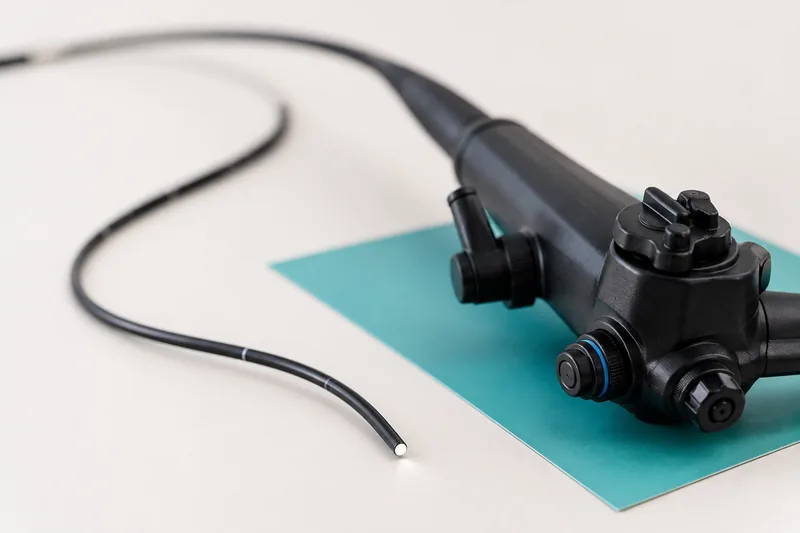
Fibre-optic Scope
Flexible nasopharyngolaryngoscopy passing comfortably through the nose to assess the nasopharynx, throat base and airway in one pass.
Operating microscope
Microscopic ear examination
Used for detailed assessment of the eardrum and for safe wax and debris removal under direct vision — considerably safer than syringing where a perforation may be present.
Microsurgical capability
The same magnification underpins microscopic ear surgery, including tympanoplasty and middle ear reconstruction.
Hearing assessment and rehabilitation
Hearing testing, speech therapy and hearing aid services are available on site rather than requiring a separate referral.
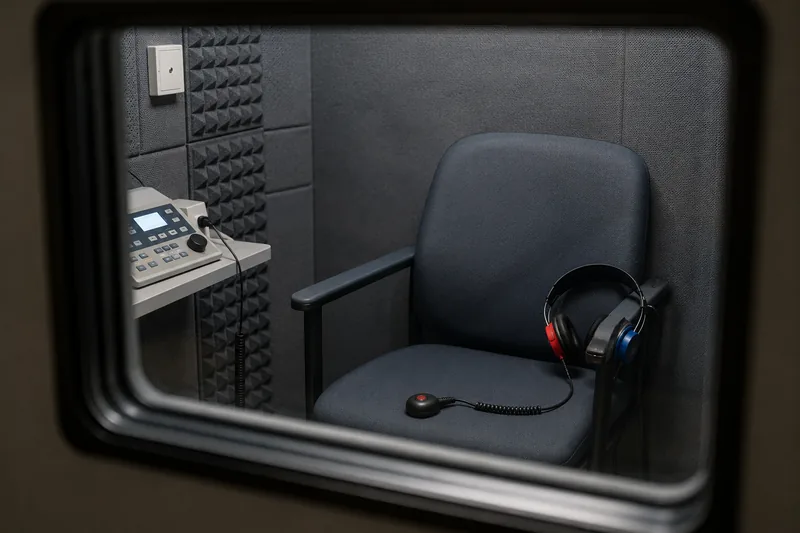
Pure Tone Audiometry
The standard hearing test, mapping the softest sound you can hear at each frequency to produce your audiogram.
Speech Audiometry
Measures how clearly you understand words, not just whether you detect sound — two people with identical audiograms can differ greatly here.
Tympanometry
Measures eardrum movement and detects middle ear fluid. Particularly valuable in children with suspected glue ear.
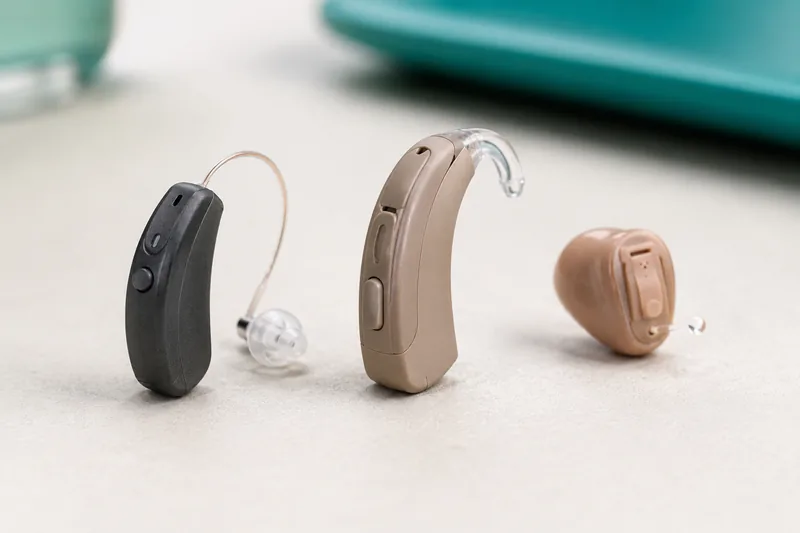
Hearing Aid Fitting
Devices from Maico (Germany), Signia (Germany) and Widex (Denmark), programmed to your individual audiogram.
Speech Therapy
For voice disorders, articulation and language delay, and as part of cochlear implant rehabilitation.
Allergy Testing
Skin prick testing and laboratory allergy panels, interpreted alongside nasal endoscopy findings.
When endoscopy, audiometry and allergy testing all happen in the same visit, you leave with a diagnosis rather than a list of tests to arrange elsewhere and a follow-up appointment weeks later. For most patients that compresses a month of back-and-forth into a single consultation.
Questions patients ask us
Is nasal endoscopy painful?
It is uncomfortable rather than painful, and it is over quickly. Anaesthetic and decongestant spray is applied first, and the scope is very slim. Most patients describe a pressure sensation. It takes two to three minutes and you watch the screen throughout.
Do I need to prepare for a hearing test?
No special preparation is needed. Avoid loud noise exposure for a few hours beforehand if possible, since temporary threshold shift can affect results. Mention any recent ear infection, and bring previous audiograms if you have them so changes over time can be compared.
Why is endoscopy better than a normal examination?
A handheld light cannot see around corners. The sinus drainage openings, the adenoids, the nasopharynx and the vocal cords are all invisible on routine examination but visible on endoscopy. Many diagnoses simply cannot be made without it, which is why chronic symptoms so often go unexplained for years.
Can I get a copy of my endoscopy images?
Yes. Images and recordings can be shared with you, and they are particularly useful if you are seeking a second opinion or being referred elsewhere. Ask at your appointment.
Talk to an ENT specialist, not a search engine.
Book a consultation at Vista ENT Clinic, Vatika Town Square, Sector 82A, Gurugram — a short drive from Kherki Daula, Manesar and the Dwarka Expressway.